
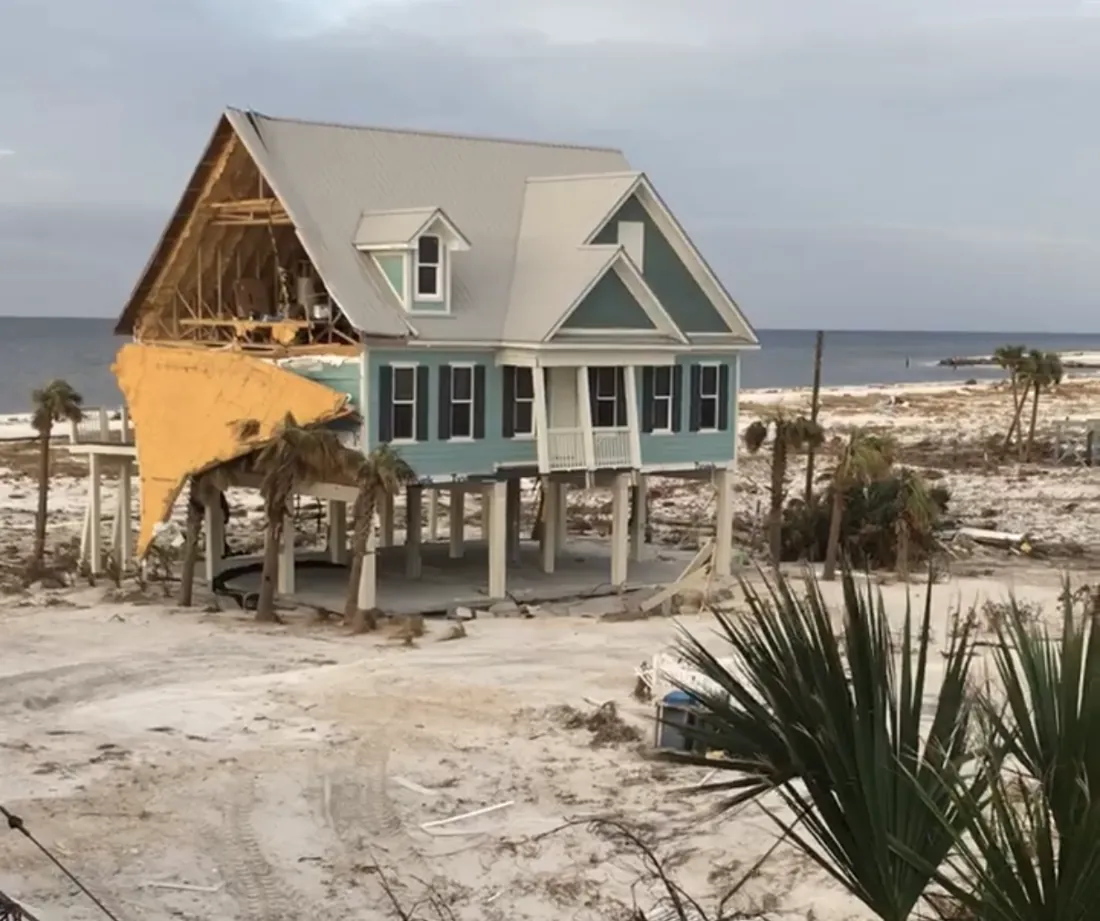
A fire-suppression line broke under a Dallas warehouse in June 2022. Nearly four years later, the fight over what that water cost reached the Supreme Court of Texas. On May 8, 2026, the Court ordered the owner into appraisal, rejecting its argument that the real dispute was coverage, causation and bad faith. The gap between the parties on mold alone was the difference between about $1.2 million and a $10 million sublimit.1
Several firm alerts have framed the opinion as a win for insurers, and others as a reaffirmation of settled law.15,16 Both readings are fair. Neither addresses the practical problem the opinion creates. If a disagreement over price is enough to force appraisal, and calling a dispute “coverage” no longer keeps it in a courtroom, then a share of the complex commercial claims that used to go straight to litigation will go to a three-person panel first.
At the same time, Texas has written appraisal into every new and renewed homeowners and personal auto policy through Senate Bill 458, and the Department of Insurance has adopted rules that will tell every claimant about appraisal in writing. The commercial side is getting harder cases. The residential side is about to get more of them. Both run into the same constraint: the number of appraisers and umpires who can competently value a complicated loss, finish on time, and write an award a court can use.
This article covers what the Court held, how the holding fits fifteen years of Texas appraisal law, what Chapter 1813 and the adopted TDI rules require, and several practical issues that have received little attention so far.
What the Texas Supreme Court decided in In re ACE American
In June 2022, a fire-suppression line ruptured beneath a Dallas food-distribution warehouse. The insurers made undisputed payments, including about $1.2 million for mold remediation, which they treated as the full value of that part of the claim. The owner, which had already finished repairs, said the full $10 million mold sublimit was owed and disputed the scope of repairs, the construction methods and code-upgrade coverage.
The insurers demanded appraisal in January 2023, renewed the demand in June 2024 after a standstill agreement, and sued to compel. The owner counterclaimed for bad faith. The trial court refused to compel, the court of appeals denied mandamus relief, and the Supreme Court of Texas granted mandamus and ordered appraisal. In re ACE Am. Ins. Co., No. 25-0461, 734 S.W.3d 887 (Tex. May 8, 2026) (orig. proceeding).1 The policyholder made three arguments. The Court rejected all three.
First, the “this is really about coverage” argument. The owner said the dispute concerned coverage, causation and whether damage existed at all, not the amount of loss. The Court held that a party trying to avoid appraisal on scope grounds must clear a significant hurdle, and that the dispute here was at least in part about the amount of loss. Id., slip op. at 7. No one disputed that the pipe leak, a covered peril, caused the damage. Whether $1.2 million or $10 million was the right mold number is a valuation question. The appraisers may set the amount of mold damage, and any dispute about allocating that amount among insurers can be resolved by the court. The owner argued that the insurers had tied further mold payments to whether a separate policy also covered mold, but the Court found that the insurers valued the mold loss at $1.2 million either way. The same logic applied to code compliance: appraisal sets the scope and cost of the work, and the court decides whether the policy pays for it. Id. at 8 to 9. Echoing its 2009 decision in Johnson, the Court said an insured cannot avoid appraisal merely because there might be a causation question that exceeds the scope of appraisal. Id. at 9 to 10 (quoting Johnson, 290 S.W.3d at 893).
Second, the “no real disagreement yet” argument. The owner argued that the insurers’ valuation had shifted over time, so there was no genuine disagreement to appraise. The Court reached for a dictionary. To disagree is simply to fail to agree, and the appraisal clause requires nothing more. Id. at 11. The insurers’ numbers had moved, but they had always been below the owner’s numbers. That was enough.
Third, the “prior breach” argument. The owner claimed the insurers’ alleged bad-faith, coverage-avoiding conduct was a material breach that excused it from appraisal. The Court repeated that Texas recognizes only two narrow grounds for refusing to enforce an appraisal clause: illegality and waiver. Neither was present. Accepting the owner’s theory would let any insured escape appraisal by alleging poor claim handling, which would gut the clause in nearly every case. Adopting the San Antonio court’s phrase from In re Acceptance Indemnity Insurance Co., 562 S.W.3d 645, 653 (Tex. App.—San Antonio 2018, orig. proceeding), the Court said the argument puts the cart before the horse, because it asks a court to decide breach before the amount of loss is known. Slip op. at 12 to 13.9
The practical rule is short. If the parties disagree on price, and it cannot be said that the amount of loss will never matter to the case, appraisal goes forward. Coverage, sublimits, other insurance, code upgrade entitlement and bad faith all stay with the court, to be decided after the panel sets the number.
How In re ACE fits Texas appraisal law
In re ACE did not invent anything. It closed doors that litigants had been testing for years, and it did so by leaning on a line of cases every Texas claims professional should know.
The enforceability baseline. Texas courts treat appraisal clauses as enforceable contract terms, and mandamus is available when a trial court refuses to compel appraisal, because the right cannot be restored on appeal once the case has been litigated to judgment. In re Allstate Cnty. Mut. Ins. Co., 85 S.W.3d 193 (Tex. 2002) (orig. proceeding).3 Waiver of appraisal requires conduct inconsistent with the right, measured from the point of impasse, plus prejudice to the other side. In re Universal Underwriters of Tex. Ins. Co., 345 S.W.3d 404 (Tex. 2011) (orig. proceeding).4 In re ACE relied on Universal Underwriters for the rule that illegality and waiver are the only recognized exceptions, and noted that neither was at issue. Slip op. at 12. In a footnote, the Court added a point that matters for every delayed demand: impasse, the starting line for measuring waiver by delay, is not the same as a disagreement about the amount of loss, which is all a party needs to demand appraisal. Id. at 11 n.5. The insurers’ first demand came seven months after the loss and was renewed about seventeen months later, after a standstill agreement.
The scope line. State Farm Lloyds v. Johnson, 290 S.W.3d 886 (Tex. 2009), is the foundation.2 A homeowner’s hail claim was denied as below the deductible, and the insurer argued that the dispute was causation rather than amount. The Court held that appraisers decide the amount of loss and courts decide liability, and that appraisers will sometimes have to separate covered damage from other causes to do their job. Its most quoted line is practical: unless the amount of loss will never be needed, appraisals should generally go forward without preemptive intervention by the courts. Id. at 895. In re ACE applies that rule to a high-value commercial loss with overlapping policies, sublimits and code issues.
What payment of the award does. Four later decisions explain why the award has become the main event in Texas first-party disputes. Timely payment of an appraisal award generally defeats a breach of contract claim and the common-law and statutory bad-faith claims that depend on it, absent an independent injury. Ortiz v. State Farm Lloyds, 589 S.W.3d 127 (Tex. 2019).5 Payment of the award does not, by itself, defeat a prompt payment claim under Chapter 542. Barbara Techs. Corp. v. State Farm Lloyds, 589 S.W.3d 806 (Tex. 2019).6 An insurer that pays an award after the statutory deadlines can still owe prompt payment interest. Hinojos v. State Farm Lloyds, 619 S.W.3d 651 (Tex. 2021).7 And on claims governed by Chapter 542A, full payment of an award plus any possible statutory interest cuts off recovery of attorney’s fees. Rodriguez v. Safeco Ins. Co. of Ind., 684 S.W.3d 789 (Tex. 2024).8
Put those cases next to In re ACE and the incentives are clear. Appraisal is hard to avoid, the award usually sets the contract damages, and payment of the award narrows what remains. Late payment still carries prompt payment interest under Barbara Technologies and Hinojos, so timing matters to the insurer as much as the number matters to the policyholder. For both sides, the quality of the panel now matters as much as the quality of the lawyering.
Need an appraiser or a neutral umpire on a Texas file? Request a conflict check. Call 913-717-9128. We respond within two business days.
SB 458, Insurance Code Chapter 1813, and TDI’s adopted appraisal rules
The statute. Senate Bill 458 (89th Leg., R.S., 2025) added Chapter 1813, Appraisal of Disputed Losses, to the Texas Insurance Code. It took effect September 1, 2025, and requires every personal auto and residential property policy delivered, issued or renewed in Texas on or after January 1, 2026 to contain an appraisal provision. It reaches stock and mutual companies, county mutuals, Lloyd’s plans, reciprocal exchanges, farm mutuals, eligible surplus lines insurers where Texas is the insured’s home state, and the FAIR Plan. It does not apply to Texas Windstorm Insurance Association policies or to commercial policies. Tex. Ins. Code §1813.001. The commissioner must adopt rules that set the period for completing appraisal and must consider the qualifications and selection of appraisers and umpires in doing so. Id. §1813.002.10
The adopted rules. TDI proposed 28 TAC §§5.9800 to 5.9806 on April 23, 2026, published them in the Texas Register on May 8, 2026, held a public hearing on June 2 under Docket No. 2862, and took comments through June 8.11 The commissioner adopted the rules on November 6, 2026, in Order No. 2026-10210.12 Sections 5.9800, 5.9802, 5.9805 and 5.9806 were adopted with changes, and sections 5.9801, 5.9803 and 5.9804 were adopted as proposed. The rules apply to personal auto and residential property policies delivered, issued for delivery or renewed on or after March 1, 2027, in place of the September 1, 2026 date first proposed. §5.9800(b). Policies issued or renewed before that date remain governed by their own appraisal wording. Published commentary reports an effective date of November 24, 2026.17
The rules require every covered appraisal provision to do six things. It must let either party demand appraisal unilaterally. It may not require an impasse before a demand. It must apply to partial and total losses, except a total loss by fire under Insurance Code §862.053(a). It must make the award binding on the amount of loss unless the award was made without authority, was not made in substantial compliance with the provision, or resulted from fraud, accident or material mistake. It must state the deadlines and process. And it may not conflict with the division or other Texas law. 28 TAC §5.9802.
The adopted residential timeline runs from the written demand:
| Step | Adopted deadline (residential) | Section |
|---|---|---|
| Demand appraisal | By the end of the policy’s limitations period for filing suit. An insurer that receives a pre-suit notice under Ins. Code §542A.003 has 60 days from the notice | §5.9805(a) |
| Each side names its appraiser | 20 days after demand | §5.9805(b)(1) |
| Appraisers choose an umpire | 15 days after appraisers are named, or 15 days after they fail to agree (the policy picks one option) | §5.9805(b)(2) |
| Notice before seeking court or vendor appointment of an umpire | At least 10 days, naming the court | §5.9805(b)(3)(C) |
| Appraisers attempt to agree | Within 120 days of demand | §5.9805(b)(4) |
| Award when an umpire is involved | Within 240 days of demand, or the umpire’s engagement terminates and a new umpire must be chosen within 15 days | §5.9805(b)(5) |
After the insurer sends the required appraisal notice, the parties may change any deadline by written agreement. §5.9805(c). Once a lawsuit is filed, the plaintiff generally may not demand appraisal unless the policy requires appraisal before suit, and a respondent must demand by the earlier of the date its answer is filed or due. §5.9805(a)(3). Personal auto runs on a shorter track: 40 days for appraisers to agree and 180 days for an umpired award, with the same limitations-period deadline to demand. §5.9806.
Who may serve. Every appraiser and umpire must be competent by training or experience to evaluate the type of loss, independent from the parties, and disinterested in the outcome. For a residential appraisal involving loss to a dwelling, the person must also be an adjuster or public adjuster with residential estimating experience or training, an engineer or architect with residential construction, investigation or estimating experience, or someone with occupational experience in building, repairing or estimating the type of loss at issue. §5.9804. TDI’s preamble explains that disinterest is meant to keep appraisers from holding a pecuniary interest in the outcome.
Telling policyholders. When the insurer sends its acceptance or rejection notice under §542.056, it must also send a plain-language appraisal notice, in at least 10-point type, explaining where the clause is in the policy, how to demand appraisal, the policyholder’s duties and expense obligations, how to get an umpire appointed, the deadlines, and the effect of the award. §5.9803. Separately, TDI adopted updated consumer bills of rights on September 18, 2026 that tell homeowners and drivers they may demand appraisal over the amount of a loss; insurers must begin providing them January 1, 2027. 28 TAC §§5.9970, 5.9971 (Comm’r Order No. 2026-10132).13
TDI’s own data explains why this matters. Its 2024 Appraisal Experience Data Call found that appraisal is demanded in only a small percentage of claims and is almost always started by the policyholder.14 Most policyholders simply do not know it exists. A written notice on every accepted or denied claim changes that.
Six practical issues for appraisal panels and the people who hire them
1. The 240-day clock is shorter than current practice. TDI’s own data shows that 50 percent of umpired residential awards were issued within 193 days of the demand and 75 percent within 278 days.11,14 Put differently, somewhere between one in four and one in two umpired residential appraisals took longer than the 240-day limit. Under the adopted rule, an umpire who misses the deadline is not given an extension. The engagement ends, and the appraisers must pick a new umpire within 15 days. That makes an umpire’s open caseload a hiring question.
There is a second consequence that has drawn little attention. Chapter 1813 requires every award to be made in substantial compliance with the policy’s appraisal clause, and the adopted rule makes noncompliance a ground for refusing to treat the award as binding. Tex. Ins. Code §1813.004; 28 TAC §5.9802(4). Because the rule also writes the 240-day deadline into the clause itself, an award signed by an umpire after that date, without a written extension, invites a challenge that it was not made in substantial compliance. A written extension agreed early costs nothing and closes that door. Anyone selecting an umpire should ask how many active umpire assignments the candidate carries and whether the candidate will issue a written schedule at the start.
2. The rules have not caught up to the policies. Chapter 1813 has applied to residential and personal auto policies issued or renewed since January 1, 2026. The rules that supply the deadlines and qualifications were adopted on November 6, 2026, and reach only policies delivered, issued or renewed on or after March 1, 2027. Appraisals arising under policies written in the fourteen months between those dates are therefore governed by policy wording that may say little about timing. Nothing stops the parties from agreeing in writing, at the outset, to follow the adopted timeline. A panel that does so protects the award from later arguments about delay.
3. The commercial side has no floor at all. In re ACE is a commercial case, and commercial policies are excluded from both Chapter 1813 and the adopted rules. So the decision most likely to push large, technical losses into appraisal arrives in the segment with no statutory qualifications, no mandatory timeline and no required notice. Competence will be defined only by the policy’s own words, usually some version of “competent and impartial,” and tested after the fact in motions to set aside the award. The sensible response is to borrow the residential standard voluntarily and add to it. A commercial umpire should be able to show experience with the building type at issue, with commercial construction pricing, and with the specific damage mechanism in dispute.
4. Write the award for the judge who comes next. The Court in In re ACE expected the trial court to handle what the panel could not. Appraisers would set the amount of mold damage, and the court would resolve any dispute about allocating that amount among insurers. Appraisers would price the code-driven work, and the court would decide whether the policy pays for it. A single lump-sum award makes that impossible without a second proceeding. A useful award separates the disputed categories: mold remediation, ordinance or law work, the cost of work already performed compared with the reasonable cost of necessary work, and replacement cost compared with actual cash value where the policy draws that line. Johnson already recognized that appraisers sometimes must allocate damage among causes. See 290 S.W.3d at 893. Itemizing does not decide coverage. It gives the court numbers to plug into whatever coverage ruling it makes. Panels should agree on the award format at the first meeting, not after the umpire’s decision.
5. When the building is already repaired, the panel is auditing, not estimating. The In re ACE owner finished repairs before appraisal, and the insurers argued the work went beyond what was needed to restore the warehouse. That is a different assignment from pricing visible damage. The panel has to test invoices, change orders, general conditions, contractor overhead and profit, time-and-material remediation billing, and whether the remediation followed a recognized protocol. Many experienced residential appraisers have never reconciled a commercial general contractor’s pay applications against a damage scope. Parties on both sides should ask about that experience directly.
6. Independence and disinterest will be tested on both sides. The adopted rule requires every appraiser and umpire to be independent from the parties and disinterested in the outcome, and the preamble to TDI’s proposal tied disinterest to a pecuniary interest in the result. That language can reach more than one arrangement. A fee that rises or falls with the size of the award is one candidate for challenge. So is an appraiser or umpire whose practice depends on steady referrals from a single carrier, law firm or public adjusting firm. Texas courts have not yet applied this rule language, and this article takes no position on where the line should fall. The practical step is the same for everyone: ask about fee terms and repeat relationships before anyone is named, and put the answers in writing, so the award is not exposed to a challenge after it is signed.
Who needs Texas appraisers and umpires, and what to ask before hiring one
The demand for qualified appraisers and umpires in Texas is going to come from several directions at once, and each buyer needs something slightly different.
Insurer large-loss and complex claims units, and their coverage counsel. In re ACE gives carriers a dependable route to appraisal on commercial losses where the real money is in scope and price. That path only pays off if the insurer’s appraiser can defend scope line by line against a contractor’s completed-work invoices, and if the award is itemized so coverage counsel has the figures needed for allocation afterward.
Policyholder counsel and public adjusters. Commercial owners should expect appraisal to go forward even while coverage and claim-handling disputes are pending. Once it does, the owner’s appraiser is effectively carrying the valuation case, and the award sets the number every later claim is measured against. On the residential side, the coming appraisal notice will put the option in front of every homeowner whose claim is accepted or denied, and some meaningful share of them will use it.
Commercial owners, asset managers and risk managers. The policyholders in In re ACE were an institutional real estate owner and its affiliates, not a small business. Owners with Texas portfolios should know who they would name as an appraiser before the next loss, not after the insurer’s demand letter arrives.
Third-party administrators and independent adjusting firms. TPAs and IA firms handling Texas commercial and surplus lines files will be asked to staff the carrier side of more appraisals and to propose umpire candidates. Firms that do not keep a bench of qualified appraisers will lose days they no longer have under a 20-day appointment clock.
Courts and umpire selection vendors. The adopted rule requires every residential appraisal provision to allow judicial appointment of an umpire in a county or district court where the property sits. An insurer may add a vendor appointment option only if the policyholder alone may invoke it, and the parties may agree in writing to another method after appraisal is demanded. §5.9805(b)(3). Judges and vendors need names of neutrals who meet the competence, independence and disinterest requirements and who can finish inside 240 days.
Whoever is doing the hiring, the questions are much the same. Has the candidate handled this type of building and this damage mechanism? Can the candidate audit completed commercial work, not just estimate it? Is the candidate licensed as an adjuster in Texas or otherwise within the rule’s qualification categories? Does the candidate have any relationship with either party, or any fee tied to the size of the award? How many open umpire or appraiser assignments does the candidate carry today? And will the candidate commit, in writing, to an itemized award format and a schedule at the first meeting?
Frequently asked questions about Texas insurance appraisal
Can an insurer force appraisal in Texas?
Yes, when the policy contains an appraisal clause and the parties disagree about the amount of loss. Under In re ACE American (Tex. 2026), pending coverage, causation or bad-faith disputes do not prevent appraisal, and only illegality or waiver will defeat an appraisal clause. The same right belongs to policyholders. For homeowners and personal auto policies subject to Chapter 1813, either party may demand appraisal on its own.
Does an appraisal panel decide coverage?
No. Under State Farm Lloyds v. Johnson (Tex. 2009), appraisers decide the amount of loss and courts decide liability. Appraisers may need to separate covered damage from other causes, and an itemized award lets the court apply its coverage rulings without a second appraisal.
Who can serve as an appraisal umpire in Texas?
For commercial policies, the policy language controls, usually requiring a competent and impartial umpire. For residential and personal auto policies, TDI’s adopted rule requires every appraiser and umpire to be competent, independent and disinterested. For loss to a dwelling, the umpire must also be an adjuster or public adjuster, an engineer or architect, or someone with occupational experience building, repairing or estimating that type of loss.
How long does appraisal take in Texas?
Under the adopted residential rule, which applies to policies issued or renewed on or after March 1, 2027, appraisers have 120 days from the demand to try to agree, and an umpired award is due within 240 days. Personal auto runs on 40 and 180 days. Commercial appraisals follow the policy. TDI’s data shows that half of umpired residential awards currently take more than 193 days.
Does SB 458 apply to commercial property or TWIA policies?
No. Chapter 1813 and the adopted rules exclude commercial policies and Texas Windstorm Insurance Association policies.
Are TDI’s appraisal rules in effect?
The commissioner adopted 28 TAC §§5.9800 to 5.9806 on November 6, 2026, in Order No. 2026-10210. They apply to covered policies delivered, issued or renewed on or after March 1, 2027. Chapter 1813 itself applies to covered policies issued or renewed on or after January 1, 2026.
What happens after an appraisal award is paid?
Timely payment generally defeats breach of contract and dependent bad-faith claims (Ortiz, 2019). Prompt payment interest may still be owed if payment was late (Barbara Technologies, 2019; Hinojos, 2021). On claims governed by Chapter 542A, full payment of the award plus any possible statutory interest cuts off attorney’s fees (Rodriguez, 2024).
The bottom line
In re ACE settles the legal question for now. When the parties disagree on price, appraisal goes forward, and the court sorts out coverage afterward. Chapter 1813 and the adopted TDI rules push the residential market the same way. What neither the Court nor the Department can supply is the people. The outcome of a Texas property dispute will increasingly turn on who sits on the panel, how fast they work, and whether the award they sign is built for the court that has to apply it.
How ORA can help
Okla Risk Advisors accepts appointments as an appraiser and as an umpire on residential and commercial property losses in Texas, and accepts engagements from policyholders and insurers. Every engagement begins with a written conflict disclosure, and fees are hourly or flat, never tied to the award. The firm also reviews completed-repair costs and scope for counsel on either side before appraisal is demanded, so the numbers are tested before the panel sees them. If you are building an appraiser bench, need an umpire candidate, or want a second look at a large loss headed for appraisal, email chrischambers@oklariskadvisors.com, call 913-717-9128, or use the contact page. Related services: appraiser and umpire services, expert witness and claim file review, each subject to a conflict check.
About the author
Chris Chambers is the founder and principal of Okla Risk Advisors and an Executive General Adjuster with more than 25 years of property and commercial property claims experience, primarily in disasters. He has handled thousands of claims, including hundreds of losses over $1 million and some of Citizens Property Insurance Corporation’s largest Hurricane Milton claims, on properties ranging from mobile homes to condominium complexes, warehouses, municipal buildings and college campuses. He holds a Texas designated home state adjuster license, is NFIP certified at all four levels, and holds FEMA IS-318.b and IICRC WRT and ASD certifications. He earned a Master of Legal Studies in Indigenous Peoples Law from the University of Oklahoma College of Law and a BGS in Economics from the University of Kansas.
This article is general information, not legal advice. The author is not an attorney. Readers should consult counsel about the application of these authorities to a specific claim, and should read the adopted text of 28 TAC §§5.9800 to 5.9806 before relying on any deadline. Authorities are current as of November 16, 2026. Slip opinion page references are to the Supreme Court of Texas opinion as issued May 8, 2026.
Sources
- In re ACE American Insurance Co., No. 25-0461, 734 S.W.3d 887 (Tex. May 8, 2026) (orig. proceeding), 2026 WL 1261448 (Lehrmann, J.). State supreme court
- State Farm Lloyds v. Johnson, 290 S.W.3d 886 (Tex. 2009). State supreme court
- In re Allstate County Mutual Insurance Co., 85 S.W.3d 193 (Tex. 2002) (orig. proceeding). State supreme court
- In re Universal Underwriters of Texas Insurance Co., 345 S.W.3d 404 (Tex. 2011) (orig. proceeding). State supreme court
- Ortiz v. State Farm Lloyds, 589 S.W.3d 127 (Tex. 2019). State supreme court
- Barbara Technologies Corp. v. State Farm Lloyds, 589 S.W.3d 806 (Tex. 2019). State supreme court
- Hinojos v. State Farm Lloyds, 619 S.W.3d 651 (Tex. 2021), 2021 WL 1080854 (Mar. 19, 2021). State supreme court
- Rodriguez v. Safeco Insurance Co. of Indiana, 684 S.W.3d 789 (Tex. 2024). State supreme court
- In re Acceptance Indemnity Insurance Co., 562 S.W.3d 645 (Tex. App.—San Antonio 2018, orig. proceeding). State appellate court
- Tex. Ins. Code ch. 1813, Appraisal of Disputed Losses, added by Act of 2025, 89th Leg., R.S., ch. 899 (S.B. 458, enrolled). State statute
- Proposed 28 Tex. Admin. Code §§5.9800 to 5.9806, Appraisal Requirements (Tex. Dep’t of Ins., filed Apr. 23, 2026; Docket No. 2862). Proposed state regulation
- 28 Tex. Admin. Code §§5.9800 to 5.9806, Appraisal Requirements, Comm’r Order No. 2026-10210 (Nov. 6, 2026; applicable to policies delivered, issued or renewed on or after Mar. 1, 2027). Adopted state regulation
- 28 Tex. Admin. Code §§5.9970, 5.9971, Consumer Bills of Rights, Comm’r Order No. 2026-10132 (Sept. 18, 2026; effective for insurer distribution Jan. 1, 2027). Adopted state regulation
- Tex. Dep’t of Ins., 2024 Appraisal Experience Data Call Report, as summarized in the preamble to the proposed rules. State agency report
- Phelps Dunbar, TX Supreme Court: Insurers Can Compel Appraisal Even During Coverage Disputes (May 21, 2026). Law firm commentary
- Property Insurance Coverage Law Blog, Texas Supreme Court Reaffirms Johnson (May 12, 2026); see also TDI’s Proposed Appraisal Rules: A Step Forward but with a Few Rough Edges (Apr. 29, 2026). Law firm commentary
- Property Insurance Coverage Law Blog, Texas Appraisal Gets a New Rulebook (Nov. 7, 2026). Law firm commentary