How the Insurance Appraisal Clause Works
Appraisal is the fastest route out of a disputed property valuation, and the most misunderstood provision in the policy. What the panel decides, what it cannot decide, and how the process actually runs.
What the clause does
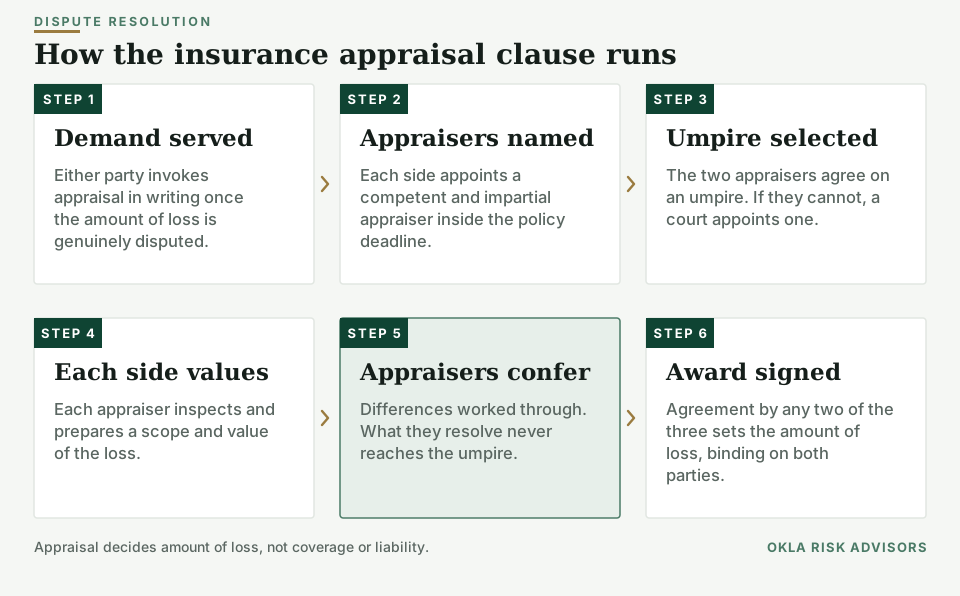
Most first-party property policies contain an appraisal provision. When the insured and the carrier disagree on the amount of loss, either side may demand appraisal. Each party selects a competent and impartial appraiser. The two appraisers select an umpire. The appraisers separately state the amount of loss, and where they differ they submit the differences to the umpire. An agreement of any two of the three sets the amount.
It is a valuation mechanism, and it is binding as to the amount. It exists so that a dispute about how much a roof costs to replace does not require a trial.
What appraisal cannot decide
Appraisal decides the amount of loss. It does not decide coverage. Whether a peril is covered, whether a condition precedent was met, whether an exclusion applies, and whether the carrier handled the claim in bad faith are questions for the court.
Causation is the contested boundary. A panel usually has to allocate damage between a covered cause and an excluded one to state an amount at all, and jurisdictions differ on how far a panel may go. A careful award separates its findings so a court can apply coverage law to them afterward.
How the process runs
Demand. One party invokes appraisal in writing under the policy terms. Timing and conditions matter and vary by policy and jurisdiction.
Appointment. Each party names an appraiser within the period the policy allows. Competent and impartial are the standard, and the appraiser's independence is worth protecting because it is the first thing challenged later.
Umpire selection. The two appraisers agree on an umpire, or a court appoints one. Disclosure of prior relationships happens here.
Inspection and exchange. The panel inspects, exchanges scopes and estimates, and narrows the differences. Most of the value of the process is created at this stage.
Award. The panel states the amount of loss, typically separating actual cash value, replacement cost, and where relevant the allocation between causes. Two signatures bind.
Preparing for appraisal
The party that arrives with a line item scope tied to physical evidence usually sets the terms of the discussion. That means measured dimensions, photographs keyed to the scope, a defensible estimating basis, documentation of code and ordinance requirements that drive the repair, and a clear statement of the depreciation methodology applied.
The party that arrives with a lump sum number and an argument usually loses ground it did not have to lose.
Common questions
What does the appraisal clause decide?
The amount of loss. Appraisal is a valuation mechanism, not a coverage forum. Questions about whether a peril is covered, whether conditions were satisfied, or whether the carrier acted in bad faith are generally for the court, not the panel, although causation frequently gets litigated at the edge of that line.
Who picks the umpire?
The two party-appointed appraisers select the umpire. If they cannot agree within the period the policy allows, either party may ask a court to appoint one. An umpire should be impartial and disinterested and should disclose anything that bears on either.
How many signatures does an award need?
Two of the three. An agreement between any two of the panel, typically one appraiser and the umpire, sets the amount of loss.
Can an appraiser be an expert witness in the same matter?
Not in the same matter. A party-appointed appraiser has a defined role on the panel. Serving as a retained testifying expert in the same dispute creates a conflict. The firm accepts one role per matter and clears conflicts before any substantive discussion.
How this firm helps
The firm serves as a party-appointed appraiser and as a neutral umpire, and separately accepts retention as a testifying or consulting expert on scope, causation, valuation, and claims handling standards. Retention is accepted from policyholder counsel and from insurer and defense counsel. Conflict checks usually clear the same day.
Contact Okla Risk Advisors or email chrischambers@oklariskadvisors.com.
Related guides and services
Have a question about your own situation?
Send the specifics. You will get a straight answer about whether this is something the firm can help with.