
For most of the history of tribal gaming and tribal enterprise growth, an insurance dispute between a tribe and its carrier followed a predictable path. The claim was adjusted, the parties disagreed, and the fight moved to a state or federal courthouse that the insurer usually preferred. That assumption has changed in the western United States, and the change came from a group of cases that began with casinos closing their doors in March 2020.
What the courts decided
The Suquamish case. Beginning in 2015, the Suquamish Tribe and its business arm, Port Madison Enterprises, bought property coverage from Lexington Insurance Company and several other insurers located off the reservation.1 When the pandemic closed tribal businesses, the Tribe sued its insurers in the Suquamish Tribal Court for breach of contract and a declaration of coverage. The tribal trial court and the tribal court of appeals both held that they had jurisdiction. The insurers then sued the tribal judges in federal court, and the district court ruled for the Tribe.5
On February 29, 2024, the Ninth Circuit affirmed. It held that the tribal court had jurisdiction over the insurers under the first exception recognized in Montana v. United States, the exception for nonmembers who enter consensual relationships with a tribe.2, 10 Because that ground was enough, the court did not reach the second Montana exception.2 The full court later declined to rehear the case by a vote of 16 to 5,4 and Judge Bumatay wrote a dissent arguing that the consensual relationship exception should not reach an insurer that never set foot on the reservation.3, 14
The Cabazon case. Lexington also insured businesses run by the Cabazon Band of Cahuilla Indians, including the Fantasy Springs Resort Casino near Indio, California, through a nationwide program known as the Tribal Property Insurance Program.7 The Band closed its businesses temporarily during the pandemic, submitted a claim, and was denied. It sued Lexington in the Cabazon Reservation Court, and Lexington responded by suing two Reservation Court judges in federal court to stop the case.7 The district court ruled for the judges, and on December 6, 2024 the Ninth Circuit affirmed, relying heavily on its decision in the Suquamish case.8 Counsel for the Band noted that it had now won the jurisdiction question in four courts: the tribal trial court, the tribal appellate court, the federal district court and the Ninth Circuit.13
The Supreme Court. Lexington asked the Supreme Court to review both decisions. The Court denied the Suquamish petition, No. 24-884, and the Cabazon petition, No. 24-906, on May 19, 2025.5, 6 A denial of review is not a ruling on the merits, but it leaves both Ninth Circuit decisions in place as binding law in that circuit.5
The 2026 tribal appellate ruling. In June 2026, Mealey’s reported that the Court of Appeals of the Sault Ste. Marie Tribe of Chippewa Indians in Michigan had affirmed a tribal court’s refusal to dismiss a casino coverage suit against the tribe’s insurers. The appellate court did not rest on Montana. It found personal jurisdiction because the insurers had agreed to it in the policies’ service of suit clause, and because they had sufficient contacts with the tribe to satisfy due process.9
Why the courts found jurisdiction
The starting point is a 1981 Supreme Court decision. In Montana v. United States, the Court held that tribes generally lack authority over the conduct of nonmembers on non-Indian land within a reservation, but it recognized two exceptions. The first covers nonmembers who enter consensual relationships with the tribe or its members through commercial dealing, contracts, leases or other arrangements.10
The Ninth Circuit treated the insurance policy as exactly that kind of relationship. An insurer that sells coverage for tribal government property, tribal businesses and operations on tribal land has entered a commercial relationship with the tribe, and a dispute over what that policy covers has the required connection to the relationship.5 Kennedys, a law firm that represents insurers, summarized the result this way: coverage actions against nonmember insurers may proceed in tribal court when the policy covers tribal businesses or government property, and the insurer does not need to have been physically present on the reservation.5
The dissenting judges saw it differently. In their view, an insurer that underwrites a risk from an office in another state has not engaged in conduct on tribal land at all, and the Supreme Court has never extended Montana that far.3, 14 That disagreement is the reason the insurers sought Supreme Court review, and it is the reason the question may return in another circuit.
Need a property claim, policy or loss reviewed for a tribal government or enterprise? Contact the firm. Call 913-717-9128. We respond within two business days.
Where the rule applies, and where it is still open
The Ninth Circuit decisions bind federal courts in Alaska, Arizona, California, Hawaii, Idaho, Montana, Nevada, Oregon and Washington. Kennedys limits its own conclusions to the Ninth Circuit,5 and tribes elsewhere should do the same until a court in their circuit addresses the issue. That includes the many tribal nations in Oklahoma, Kansas and New Mexico, which sit in the Tenth Circuit.
The Sault Ste. Marie ruling shows that the Montana question is not the only route. A tribal court can also find jurisdiction because the insurer consented to it. Many surplus lines property policies contain a service of suit clause, in which the insurer agrees to submit to a court of competent jurisdiction selected by the insured. The Sault Ste. Marie appellate court relied on that clause.9 A tribe that wants to keep the option of its own court should read that clause, and any forum selection or choice of law clause, before renewal rather than after a loss.
From pandemic closures to physical losses
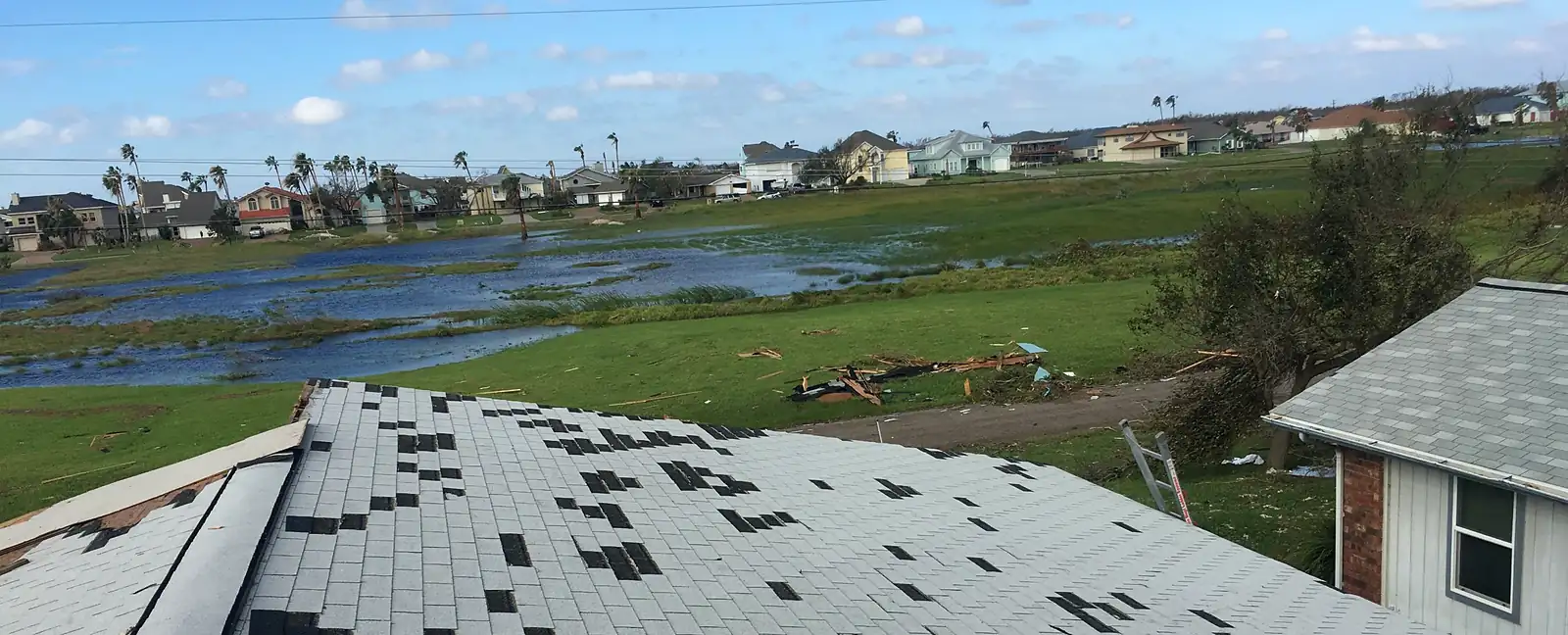
Every case so far grew out of COVID-19 business interruption claims. Those claims turned on a legal question: whether a virus causes direct physical loss or damage. The next generation of tribal insurance disputes will look different. They will involve hail on a casino roof, wind damage to a hotel tower, a wildfire that takes out tribal housing, or floodwater in a government center. Nothing in the reasoning of the Ninth Circuit limits it to pandemic losses, because the jurisdictional hook is the insurance contract itself, not the type of loss.
That shift matters, because physical loss disputes are fought over facts. How much of the roof was damaged on the date of loss, and how much was already worn? Can the damaged cladding be matched, or does the whole elevation need to be replaced? What does the tribal building code require when the structure is rebuilt? How long should the repair reasonably take, and what revenue was lost in that time? A tribal court will need the same evidence a state court would need to answer those questions: estimates, photographs, engineering opinions, repair records and testimony from people who have handled losses of that size.
Program structure adds another layer. Many tribes buy property coverage through pooled or layered programs. Tribal First, a specialized program of Alliant, has served tribal governments and enterprises since 1993.11 In litigation filed by the Pascua Yaqui Tribe, the Tribe described the Tribal Property Insurance Program as a set of policies from several carriers, led by Lexington and arranged in layers.12 A large loss under that kind of program can involve several insurers, each with its own policy language and its own view of the claim. The claim file needs to show not only the total loss but how it falls into each layer.
Where appraisal fits when the forum is tribal court
Most commercial property policies contain an appraisal clause. When the parties disagree only about the amount of loss, either side can demand appraisal, each side names an appraiser, and the appraisers choose an umpire to break any deadlock. The panel decides how much the loss is worth. It does not decide whether the loss is covered. ORA’s guide to how the appraisal clause works covers the process in detail.
Tribal court jurisdiction raises practical questions that standard appraisal clauses were not written to answer. Many clauses provide that if the appraisers cannot agree on an umpire, a judge of a court of record in the state where the property is located will appoint one. When the property is on trust land and the coverage dispute is pending in tribal court, the parties should decide early, with counsel, which court will appoint an umpire and confirm or set aside an award. Settling that question in writing at the first panel meeting avoids a second jurisdictional fight in the middle of the first one.
The choice of appraiser and umpire matters as much as the choice of court. Tribal facilities often operate continuously, sit on land with its own codes and approval processes, and include cultural spaces that cannot be valued like ordinary commercial square footage. An appraiser who has never priced a casino floor, a tribal clinic or a ceremonial building is learning on the tribe’s time.
Build the claim file for any forum
The lesson of these cases is not that tribes should sue in tribal court. It is that tribes now have real choices about where a dispute is heard, and those choices are only valuable if the evidence holds up. The following steps protect a claim no matter where it ends up.
- Document condition before the loss. Keep dated roof reports, maintenance records and photographs for every insured building. Pre-loss condition is the first thing an insurer will question.
- Keep the property schedule current. Values, construction type and occupancy on the schedule should match the buildings as they stand today, including expansions and new housing.
- Photograph and measure immediately. Date-stamped photographs, drone imagery and measurements taken in the first days after a loss are hard to dispute later.
- Get an independent scope and estimate. A line-item estimate that separates storm damage from wear, and code upgrades from like-kind repair, gives counsel something to defend.
- Track business income from the first day. Daily revenue, payroll and extra expense records are the core of any interruption claim.
- Put everything in writing. Notice, requests for information and every agreement on scope or timing should be confirmed in writing to each insurer in the program.
Common questions
Can a tribe sue its insurer in tribal court?
In the Ninth Circuit, yes, when the policy covers tribal property, tribal businesses or operations on tribal land. Under Lexington Insurance Co. v. Smith (2024) and Lexington Insurance Co. v. Mueller (2024), the insurance contract is a consensual relationship with the tribe under the first Montana exception. Outside the Ninth Circuit the question has not been settled by a federal appeals court.
Did the Supreme Court decide whether tribal courts can hear insurance disputes?
No. On May 19, 2025 the Supreme Court declined to review both Ninth Circuit decisions. A denial of review is not a ruling on the merits, but it leaves the Ninth Circuit decisions in place.
Do these rulings apply to hail, wind, flood and fire claims?
The cases involved pandemic business interruption claims, but the jurisdictional reasoning rests on the insurance contract, not on the type of loss. Each case still depends on its own facts and policy language.
Does tribal court jurisdiction mean the claim is covered?
No. Jurisdiction decides where the dispute is heard. The policy language and the evidence of scope, cause and value decide what the insurer owes.
What is a service of suit clause?
It is a clause, common in surplus lines property policies, in which the insurer agrees to submit to a court of competent jurisdiction selected by the insured. In 2026 a tribal appellate court in Michigan relied on that kind of clause to find jurisdiction over a tribe’s insurers.
What should a tribe review before its next renewal?
The service of suit, forum selection, choice of law and appraisal clauses; the property schedule and values; the structure of any pooled or layered program; and the documentation the tribe keeps on the condition of its buildings.
How ORA can help
Okla Risk Advisors works with tribal governments, tribal enterprises and their counsel on property claims from the first inspection through dispute resolution. The firm prepares independent scopes and estimates, reviews insurer adjustments, serves as a party-appointed appraiser or neutral umpire, and provides expert witness opinions on scope, causation, valuation and claim handling in tribal, state and federal courts.
The firm’s founder is an Executive General Adjuster with more than 25 years of catastrophe and large loss experience and a Master of Legal Studies in Indigenous Peoples Law. That combination is rare: someone who can read the jurisdictional briefing and then walk the roof. Okla Risk Advisors is a Native American owned firm. See the tribal services page or request a conflict check.
About the author
Chris Chambers is the founder and principal of Okla Risk Advisors and an Executive General Adjuster with more than 25 years of property and commercial property claims experience, primarily in disasters. He has handled thousands of claims, including hundreds of losses over $1 million, on properties ranging from mobile homes to condominium complexes, warehouses, municipal buildings and college campuses. He is NFIP certified at all four levels and holds FEMA IS-318.b and IICRC WRT and ASD certifications. He earned a Master of Legal Studies in Indigenous Peoples Law from the University of Oklahoma College of Law and a BGS in Economics from the University of Kansas, and he is an enrolled citizen of the Choctaw Nation of Oklahoma.
This article is general information, not legal advice. The author is not an attorney, and Okla Risk Advisors is not a law firm. Readers should consult counsel about how these authorities apply to a specific claim or tribal government. Authorities are current as of November 12, 2026.
Sources
- Lexington Insurance Co. v. Smith, 94 F.4th 870 (9th Cir. Feb. 29, 2024). Federal appeals court
- Snell & Wilmer, “The Ninth Circuit Affirms Tribal Court Jurisdiction Over Insurance Provider” (Mar. 7, 2024). Law firm analysis
- Lexington Insurance Co. v. Smith, 117 F.4th 1106 (9th Cir. 2024) (order denying rehearing en banc; Bumatay, J., dissenting). Federal appeals court
- Van Ness Feldman, Ninth Circuit denies rehearing en banc in Lexington v. Smith (Sept. 2024). Law firm analysis
- Kennedys, “Insurers remain subject to tribal jurisdiction in the Ninth Circuit following denial of certiorari by the Supreme Court” (2025). Law firm analysis
- Supreme Court of the United States, Docket No. 24-906, Lexington Insurance Co. v. Mueller (petition denied May 19, 2025). U.S. Supreme Court docket
- Petition appendix, Lexington Insurance Co. v. Mueller, No. 24-906, including the Ninth Circuit memorandum and district court order. Court record
- Snell & Wilmer, “Ninth Circuit Upholds Tribal Court Jurisdiction in Lexington Insurance Dispute” (Dec. 18, 2024). Law firm analysis
- Mealey’s, “Panel: Tribal Court Has Jurisdiction Over Coverage Suit Over Coronavirus Losses” (June 8, 2026). Legal news
- Montana v. United States, 450 U.S. 544 (1981). U.S. Supreme Court
- Tribal First, “About Tribal First”. Program information
- Complaint, Pascua Yaqui Tribe et al. v. Lexington Insurance Co. et al. (describing the Tribal Property Insurance Program). Court filing
- Procopio, “Latest Cabazon Victory” (Dec. 16, 2024). Law firm announcement
- “Lexington Insurance Co. v. Smith,” Recent Case, 138 Harv. L. Rev. 1689. Law review